 Frédéric H. Proulx
When a Country Defaults on Its Debt, You're the One Who Pays the Bill
A country that can no longer repay its debts seems distant. Yet, the consequences hit your wallet, your job, and your daily life directly. Here's what really happens when the state can no longer pay.
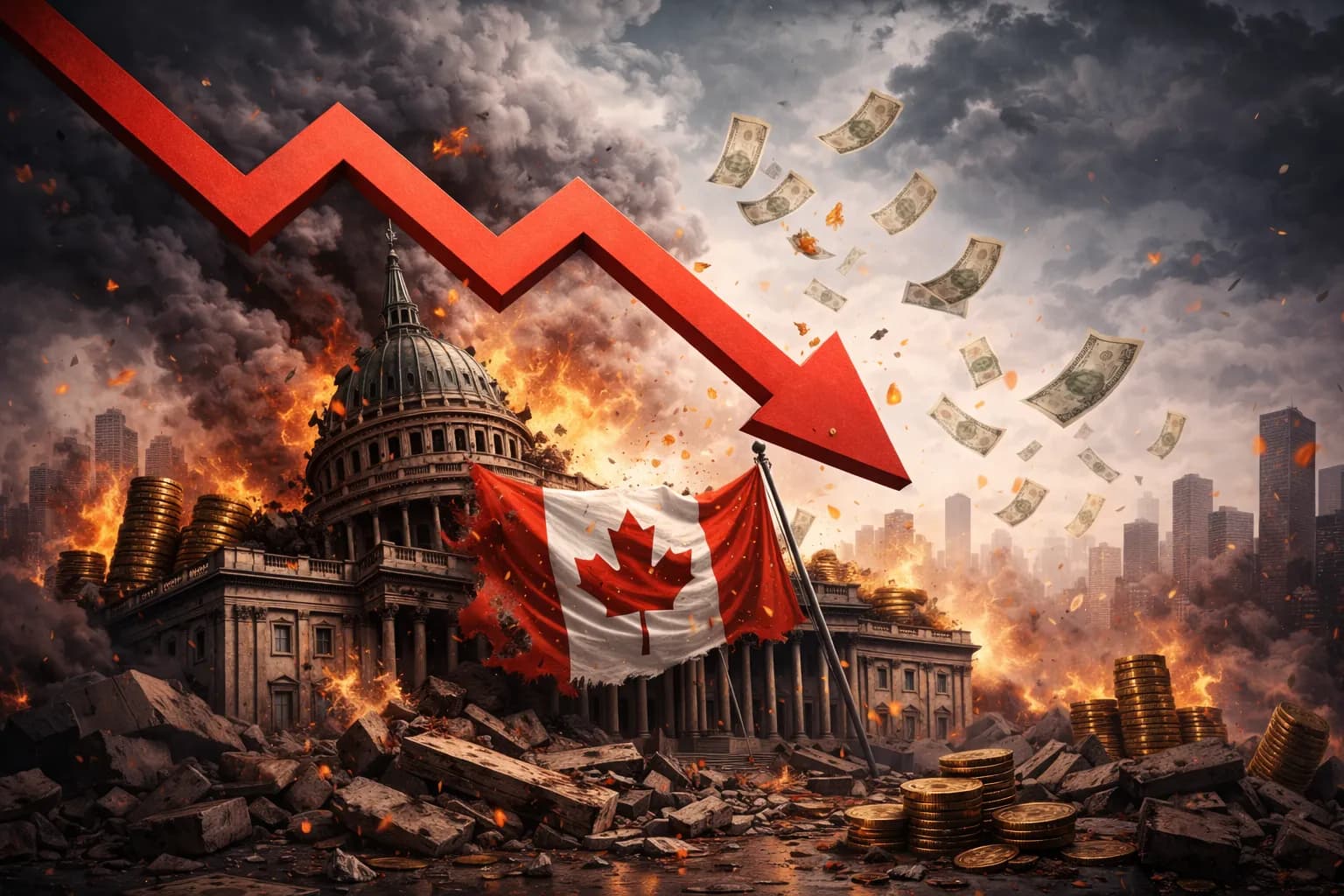
You hear about public debt, deficit, default. Words that sound like problems for big leaders, far from your reality. But when a country can no longer repay what it owes, the real losers are us. Ordinary citizens. Your economic life shifts, without you asking for anything.
What exactly is a default?
Imagine you owe money to the bank, and you can no longer make your payments. The country is the same. It borrows to finance its spending — roads, schools, services — and when it can no longer repay its creditors, it's a sovereign default. Except unlike you, a country doesn't go bankrupt. It simply stops paying, and the whole world knows.
The creditors — banks, foreign investors, other countries — no longer receive their money. They lose confidence, and the country becomes a financial pariah.
Interest rates on new debts explode, because lending becomes risky. The state has to pay more to borrow, and that's money that doesn't go into your services.
The national currency loses value. Your dollar is worth less abroad, and everything you import — gas, electronics, food — costs more.
A default is like a crisis of confidence that spreads to the entire economy. And you're the one who suffers the repercussions.
The consequences in your daily life
You think it's abstract? Think again. When a country defaults, the effects are felt quickly in your life. Your purchasing power shrinks, your projects become uncertain, and the state cuts services to try to recover.
Inflation climbs. With a weakened currency, grocery, housing, and gas prices skyrocket. Your salary doesn't keep up, and you get poorer without moving.
Budget cuts arrive. The state reduces spending to save, so less money for hospitals, schools, roads. The quality of public services drops, and you depend on them.
Unemployment rises. Businesses hesitate to invest, some close, and layoffs multiply. Finding a job becomes an obstacle course.
You see, it's not just a story of numbers in a budget. It's your standard of living that takes a hit. And often, governments respond by raising taxes to fill the hole, which hits you even harder.
Why do countries end up there?
Public debt is like a giant credit card. If you spend more than you earn, year after year, the bill grows. Countries default when they accumulate too much debt, often due to poor political or economic decisions.
An irresponsible management of public finances. Borrowing to finance current spending, without a repayment plan.
Economic shocks — like a pandemic or a financial crisis — that plunge revenues and explode spending.
An excessive dependence on foreign borrowing. If creditors lose confidence, they cut off the funds, and the country is left dry.
It's a vicious circle: the more you borrow, the more vulnerable you become. And when the music stops, it's the population that pays the price.
Examples that make you think
Look around you. Argentina has defaulted several times, and Argentines saw their economy collapse, with triple-digit inflation and widespread poverty. Greece, during the euro crisis, imposed drastic austerity measures — pension cuts, tax hikes — that plunged families into misery.
These countries are not isolated cases. They show that default is not a simple technical correction, but a collective trauma. Citizens pay for years, with fewer services, fewer opportunities, and an uncertain future.
And us, in Quebec?
Our public debt is high, and it continues to grow. We borrow to pay for current spending, a bit like if you used your credit card for groceries, without ever repaying the balance. The risk isn't immediate, but it's real.
If interest rates rise, the cost of servicing the debt explodes. More money for bankers, less for your needs.
An economic crisis could push us to the brink, with painful cuts in public services.
You don't have to panic, but you need to be aware. Public debt isn't a numbers game. It's your money, your future, and that of your children. When a country defaults, it's always the citizens who bear the brunt.
So, next time you hear about public debt, remember: it's your wallet at stake. Inform yourself, question, and demand transparency. Because in this equation, you are the most important variable.